Vave
Vave- Supported Coins
- Not Disclosed
- Pre-verification Limit
- Not Disclosed
- License
- Not Disclosed
Crypto casinos in Korea, read from their own documents
What you can check yourself
When comparing casino sites, this page covers items you can check directly—such as license registry lookups, identity verification terms, and withdrawal processing times—instead of advertising claims.

 Rocketpot
- Supported Coins
- 13
- Pre-verification Limit
- 원2,500
- License
- Curacao
 Bitcasino.io
- Supported Coins
- Not Disclosed
- Pre-verification Limit
- 2,500 EUR
- License
- Curaçao Gaming Authority
 Wild Fortune
- Supported Coins
- 10
- Pre-verification Limit
- Not Disclosed
- License
- Anjouan Gaming Board
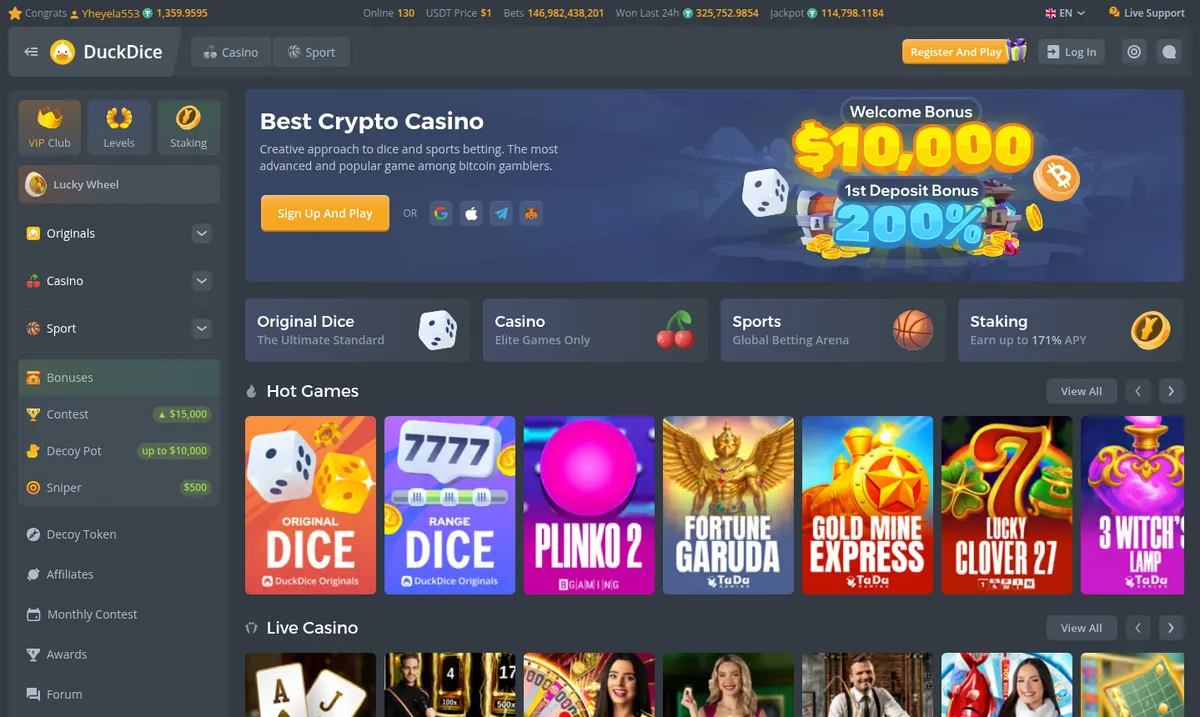
 DuckDice
- Supported Coins
- 10
- Pre-verification Limit
- Not Disclosed
- License
- Anjouan Gaming Board
 Empire.io
- Supported Coins
- Not Disclosed
- Pre-verification Limit
- 2,000 USDT
- License
- Anjouan Gaming Board
 Metaspins
- Supported Coins
- 8
- Pre-verification Limit
- Not Disclosed
- License
- Curaçao Gaming Authority
- Supported Coins
- 9
- Pre-verification Limit
- Not Disclosed
- License
- Anjouan Gaming Board
 Shuffle
- Supported Coins
- 6
- Pre-verification Limit
- Not Disclosed
- License
- Curaçao Gaming Authority
 Wild.io
- Supported Coins
- 12
- Pre-verification Limit
- Not Disclosed
- License
- Curaçao Gaming Authority
First, confirm that no domestic license exists
In South Korea, there is no domestic license that permits online casino operations. The National Gambling Control Commission supervises the gambling industry overall, but it is not an agency that issues licenses to online casinos. The National Sports Promotion Act covers only part of legal gambling, such as sports promotion voting tickets, and general casino sites are not subject to it. Therefore, all online casinos operating in Korean are overseas operators.
This fact is the starting point of comparison. Since no domestic license exists, the word “safe” in advertising is not an approval from regulators. Rather, a license issued in a foreign jurisdiction and its registration number are the only verifiable basis. The first things a reader should look at when choosing a site are the operator name and license number. The term crypto casino is no exception.
Not all overseas operators are the same. Whether the number can be found in the issuer’s registry and whether the operating entity matches the corporation recorded in the registry cannot be determined from the site’s own description alone. A comparison table does not perform this verification for you. It can only suggest how to check.
The fact that domestic law does not allow online casinos is also tied to the user’s legal position. Having a foreign license does not mean that a Korean court will enforce the site’s terms. Therefore, domestic users have limited practical remedies when a dispute arises. Comparison materials should reveal this asymmetry rather than hide it.
For example, even if a site displays a license number from a specific jurisdiction, that number may be expired or linked to a different domain. Without a registry lookup, you cannot tell the difference. The existence of a license number is only the start of verification, not the end.
License registry lookup is the starting point for comparison
Lists titled casino site collections or casino site recommendations mostly highlight welcome bonuses or game counts. However, bonus terms can change at any time. In contrast, a license registry lookup is a fact check you can do right away. You connect to the database published by the issuer and enter the operator name or permit number.
The operator-checks article explains this lookup process step by step. Whether the operator’s license in the comparison table actually exists in the registry, when it expires, and whether the permitted domain is the same as the address you are visiting now must be checked in a separate document. A license number alone does not guarantee all of a site’s actions.
There are remaining issues even after the license is confirmed. The level of regulatory oversight differs by jurisdiction, and it is practically difficult for users to file a lawsuit abroad. For this reason, a license lookup is a minimum filter. Sites that do not appear in the registry should reasonably be excluded from comparison. Online casino site rankings only matter after this step.
Looking at the lookup process in detail, you should search for the operator name on the regulator’s official website and cross-check that the domain shown in the registry matches the address you are currently visiting. Some registries show whether the status is “active” or suspended. If you skip this step and cite only the license number, you cannot know whether the number on screen matches the one in the actual registry.
Some readers may think bonus terms are more important than a license. But a bonus is only valuable when the operator has both the will and the ability to pay. A license lookup does not show ability to pay, but it is a minimum filter that eliminates operators whose identity is not even confirmed. Discussing rankings without this filter is like advertising without evidence.
Why Identity Verification Clauses Actually Differ
Overseas operators’ terms differ in when they require identity verification. Some ask for documents before the first deposit, while others ask only at the time of a withdrawal request. This difference determines when your funds can be tied up. The most common clause is loose at sign-up and tightens at withdrawal. This is the part that casino site recommendation blurbs don’t tell you.
As covered in the overseas-operators article, the types of required documents also differ. Some accept only a passport, while others also require proof of address and verification of the payment method’s holder. If the terms do not specify the retention period for required documents and the consequences of refusing to submit them, that vagueness is likely to be applied against the user.
Identity verification clauses are a more important comparison item than recommendation texts. If you are asked for ID at the point of withdrawal and the review of submitted documents takes a long time, access to your funds is delayed. You cannot tell whether the delay is intentional or simply processing time. Therefore, sites with clear verification procedures stated in their terms should take priority in comparisons.
As a concrete example, assume a user signs up with just an email, deposits, plays, and then requests a withdrawal. If the terms require a passport, proof of address, and proof of funds at the time of withdrawal, the user may not have an English-language proof of address ready. Review periods are often not specified in the terms. Meanwhile, the withdrawal request remains pending. It is hard to claim an obvious violation because the operator acted according to the terms.
Another thing you can’t verify is how long submitted documents are retained. If the terms do not specify a retention period and destruction process, you cannot know how long your identity information is stored. When covering identity verification clauses in the comparison table, you should record not only the timing and list of documents but also whether a retention period is stated.
The Right Way to Compare Withdrawal Times
Withdrawal time is the most commonly cited number in online casino comparisons. But most figures are qualified as “business days.” A withdrawal requested on Friday evening may not be processed until Tuesday after the weekend. An ad’s “24-hour withdrawal” is often not a processing time but a minimum under certain conditions.
You should separate processing time from bank posting time. Even after the site’s internal approval, the settlement provider or blockchain network confirmation time is added. Crypto withdrawals fluctuate with network congestion. KRW withdrawals are affected by financial institutions’ business hours. The ranking-method article reflects this distinction.
What matters more is whether the withdrawal time is fixed in the terms. “Usually one business day” is not a promise. If the terms contain no compensation for delayed withdrawals or a channel for inquiries, the timeframe is effectively at the operator’s discretion. When the comparison table covers withdrawal times, it should quote the exact wording from the terms. The same standard applies to slot sites.
The reason the notation “1 business day” is not a promise is that clocks run differently. The operator’s clock often starts not from receipt of the withdrawal request but from completion of internal approval. If internal approval itself is delayed, the time the user sees is meaningless. Therefore, the comparison table should separate the period from request to approval and from approval to network transmission.
The phrase “instant withdrawal” in ads should also be broken down the same way. In a crypto withdrawal, the operator’s act of sending the transaction to the blockchain may be instant, but block confirmation can take from tens of minutes to several hours depending on network congestion. If the terms do not say which interval the phrase refers to, that claim cannot be used as a basis for comparison.
How to Read Casino Site Recommendations and Rankings
Lists titled online casino rankings are often arranged based on sign-up benefits. But a bonus amount means nothing before you read the rollover conditions and game restrictions. If a 100% match bonus requires a 40x rollover, that bonus is not withdrawable cash; it’s a marketing cost. Rankings should reflect these conditions.
Casino site recommendation text is not necessarily bad. But the basis for a recommendation must come from items the reader can reproduce, such as license lookups, identity verification terms, and withdrawal processing statements. The what-safe-means article points out that the phrase “safe casino” is not the same as regulatory approval. When you accept a recommendation, it’s better to demand the evidence behind it.
Casino site collection pages are useful for broadening the range of candidates for comparison. However, being included in a collection does not mean verification. Whether the operator paid for the listing is not disclosed. After choosing candidates from a collection, you should apply the verification items described on this page yourself.
Many readers assume the higher the ranking, the safer the site. But a ranking is no different from advertising if its criteria are not disclosed. A ranking has evidentiary weight only when it also states which documents were reviewed, when, and which clauses were compared. Otherwise, it is just an arrangement designed to attract clicks.
For example, let’s say Site A is ranked higher than Site B. If the reason is A’s larger bonus amount, then if A’s rollover is 40x and B’s is 25x, the meaning of the ranking changes. It changes even more if game restrictions also differ. Before looking at the ranking number, you should ask for the basis on which the ranking was calculated.
Differences Between Crypto Casinos and KRW Payment
Crypto casinos are divided into sites that accept only cryptocurrency deposits and withdrawals and sites that accept both KRW and cryptocurrency. The phrase bitcoin casino often includes the latter. KRW deposits go through financial institutions, so records are left. Crypto deposits use blockchain addresses, but you cannot assume they guarantee anonymity. This difference matters when choosing a crypto casino site.
The coin-casino article summarizes the payment flow of cryptocurrency casinos. Tether casinos have low price fluctuation because USDT is pegged to the dollar, but network fees and transfer times are separate. In a cryptocurrency casino, if you enter the wrong withdrawal address, recovery procedures are rarely specified in the terms.
The biggest difference for a crypto casino is that withdrawal times depend on network conditions. Even after the site approves the withdrawal, if blockchain confirmation is delayed, the funds do not arrive. The delay is not the site’s fault, but users find it hard to tell whether the problem is on the site’s side or the network’s side. Therefore, crypto withdrawals should be recorded separately as processing time and confirmation time. The risk of crypto gambling increases here.
The anonymity of cryptocurrencies can conflict with identity verification clauses. Even if a wallet address is enough at the deposit stage, if ID is requested at the withdrawal stage, that address becomes linked to a specific individual. A site advertising anonymous play does not make the identity verification requirements in its terms disappear. Comparison tables should separately confirm whether identity verification applies to crypto users.
Another structural opacity is the operator's wallet liquidity. When withdrawal requests pile up, the operator may delay transfers citing network congestion. Since no transactions appear on the blockchain, users cannot tell whether the network is genuinely congested or whether the operator simply did not send. This point cannot be verified through public documents.
Areas that scam verification cannot confirm
Scam verification communities are useful in that they share victim cases. But the phrase “verified” for a particular site should be read with caution. If the verifier does not disclose what it actually checked, that phrase is no different from advertising. At minimum, you should confirm whether there was a license lookup, a review of the terms, and a cross-check of the operator's information.
The limits of verifiable items are clear. An operator's capital, actual ability to pay, and willingness to settle disputes cannot be confirmed through public documents. Therefore, no verification can ever mean that withdrawals are guaranteed. Verification is better suited to uncovering unfavorable terms. The phrase “safe casino” is most dangerous when it hides these limitations.
When dealing with overseas betting sites or overseas casino sites, scam verification runs into areas beyond the reach of domestic courts. Even if harm occurs, if the jurisdiction is different, the remedy process is long and costly. Lists that ignore this reality and promise “the sure thing” are actually dangerous. Comparison materials should not hide uncertain areas.
What verification communities actually check is generally the domain registration date, hosting location, and the displayed license number. This information can show an operator's track record but not its future willingness to pay. If the terms change after the verification, the previous verification loses force. Therefore, verification results must always carry a date of confirmation.
For example, a site that passed verification yesterday may add a 30-day withdrawal hold clause to its terms today. Yesterday's verification did not address that clause, so it effectively verified a different subject than the current site. Unless term changes are tracked in real time, verification is nothing more than a snapshot.
The Issue of Term Changes and Restricted Country Clauses
Overseas operators almost always include a clause allowing terms to be changed without notice. Even if a notice of change is sent by email, if the user does not read it, the new conditions apply as is. Withdrawal limits, identity verification requirements, and bonus rollover are particularly frequent changes. Terms in effect when a comparison table was made cannot be assumed to still be valid now.
Restricted country clauses have not been individually verified, and you should read the terms before depositing. This sentence is not a formal warning. It is common to see clauses stating that if you are deemed a resident of a certain country, your account may be frozen or withdrawals rejected. When and on what basis a South Korean resident becomes restricted varies by site's terms.
The word “safe” should be broken down into specific terms in the terms and conditions. When comparing online casino sites, you need an approach that reads the wording that may change later, not just what is on the screen now. Without a record of verification by the reader themselves, no recommendation can serve as a basis. This page's comparison standards focus on leaving such a record.
The common form of a terms-change clause is “effective upon posting on the site.” Users are likely not to revisit the terms page after sign-up. In that case, users can be bound by terms they never saw. Comparison sites should record the version of the terms and the date of verification to mitigate this issue.
Restricted-country clauses are often operated at the operator's discretion rather than as a fixed list. Even if a South Korean resident is allowed at the time of deposit, withdrawals may be refused later if the operator changes its policy. This risk cannot be confirmed without reading the individual terms. Therefore, the warning wording in the text is not a formal sentence readers can skip.